
- This event has passed.
Think and Drink: Science of Sarcasm
September 3 @ 6:00 pm – 7:00 pm CDT
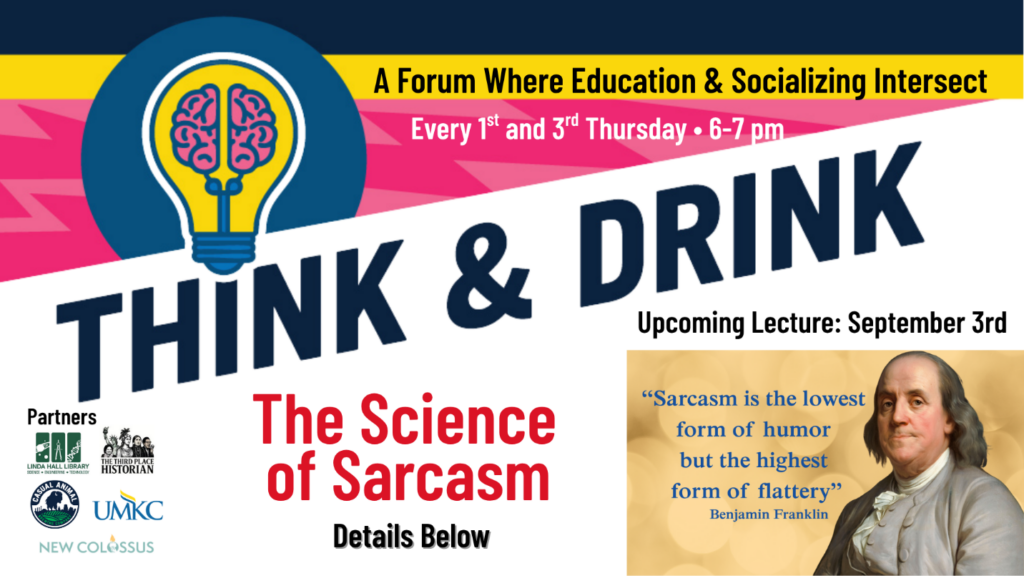
Despite there being no logical reason to say the opposite of what you mean, and many people dismissing sarcasm as maladaptive, full of contempt, and “bad for you”, its use is ubiquitous. So, why would anybody use verbal irony and sarcasm, if we risk not only being misunderstood, but possibly worse? Newer science says that irony is actually good for you! It can help regulate emotions, foster creativity, and manage social relationships. This lecture will discuss science related to sarcasm, from examples and prevalence of sarcasm in the world around us, what happens in your brain when you encounter it, and how we can use this communicative superpower to our advantage.
This free Think & Drink lecture is open to all ESU members and the public, but RSVP is required. You will also receive at least one reminder email about the event when you RSVP.
When: Thursday, September 3, 2026, 6:00 pm
Location: Casual Animal Brewing, 1725 McGee Street Kansas City, MO
Tickets: Free admission but RSVP is required. Click here and scroll down to September 3rd to RSVP.
Parking: Street parking available but arrive early for best choices and for best non-reserved open seating.
About Think & Drink Lecture Series:
Think & Drink is an exciting new kind of event that combines educational topics with social gatherings. This one-hour lecture program was launched in July of 2025 by Casual Animal Brewing Company, a microbrewery in the East Crossroads area, south of downtown Kansas City. The lectures are held on the first and third Thursday of every month and bring together experts, academics, and curious minds for evening talks on topics that generate fresh perspectives, ideas, and discussion. No topic is off the table.
Guest Speaker: Dr. Valeria Pfeifer

Dr. Pfeifer is the Assistant Professor of Psychology and Counseling, University of Missouri-Kansas City. She broadly studies the Psychology of Language, specifically asking questions about how language relates to cognition, emotions, and aging. For example, Dr. Pfeifer is interested in how language and social interactions relate to wellbeing, especially in older adults. She also researches how figurative language (such as metaphor or irony) can help express and regulate emotions.